
Nvidia GeForce RTX 5070 Ti: Performance and Value Analyzed
While the Nvidia GeForce RTX 5090 delivered modest gains over the RTX 4090 at a steep cost, the Nvidia GeForce RTX 5070 Ti offers a more budget-friendly option. Though its performance doesn't significantly outpace its predecessor, its affordability makes it the most practical Blackwell graphics card for those without endless funds.
Priced at $749, the GeForce RTX 5070 Ti excels as a 4K graphics card, nearly overshadowing the pricier RTX 5080. However, the review unit, an aftermarket MSI model, costs $1,099—surpassing the $999 RTX 5080. If you can secure an RTX 5070 Ti at $749, it’s likely the top choice for most gamers, especially those aiming for 4K gaming.
Purchasing Guide
The Nvidia GeForce RTX 5070 Ti launches February 20, 2025, starting at $749. Note that this is the base price, with many variants commanding higher costs. While it offers strong value at $749, its appeal diminishes as prices approach the RTX 5080’s range.
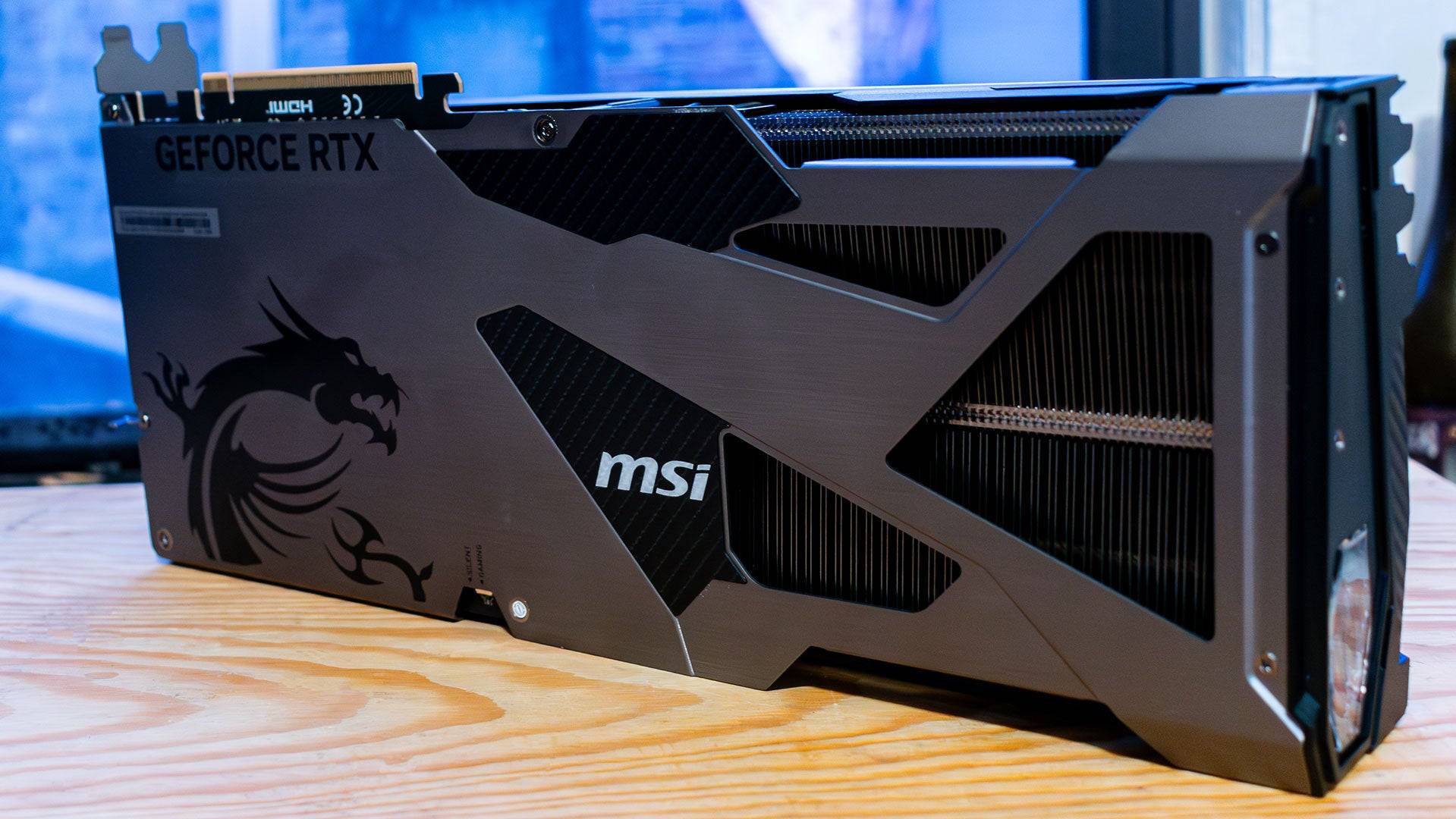
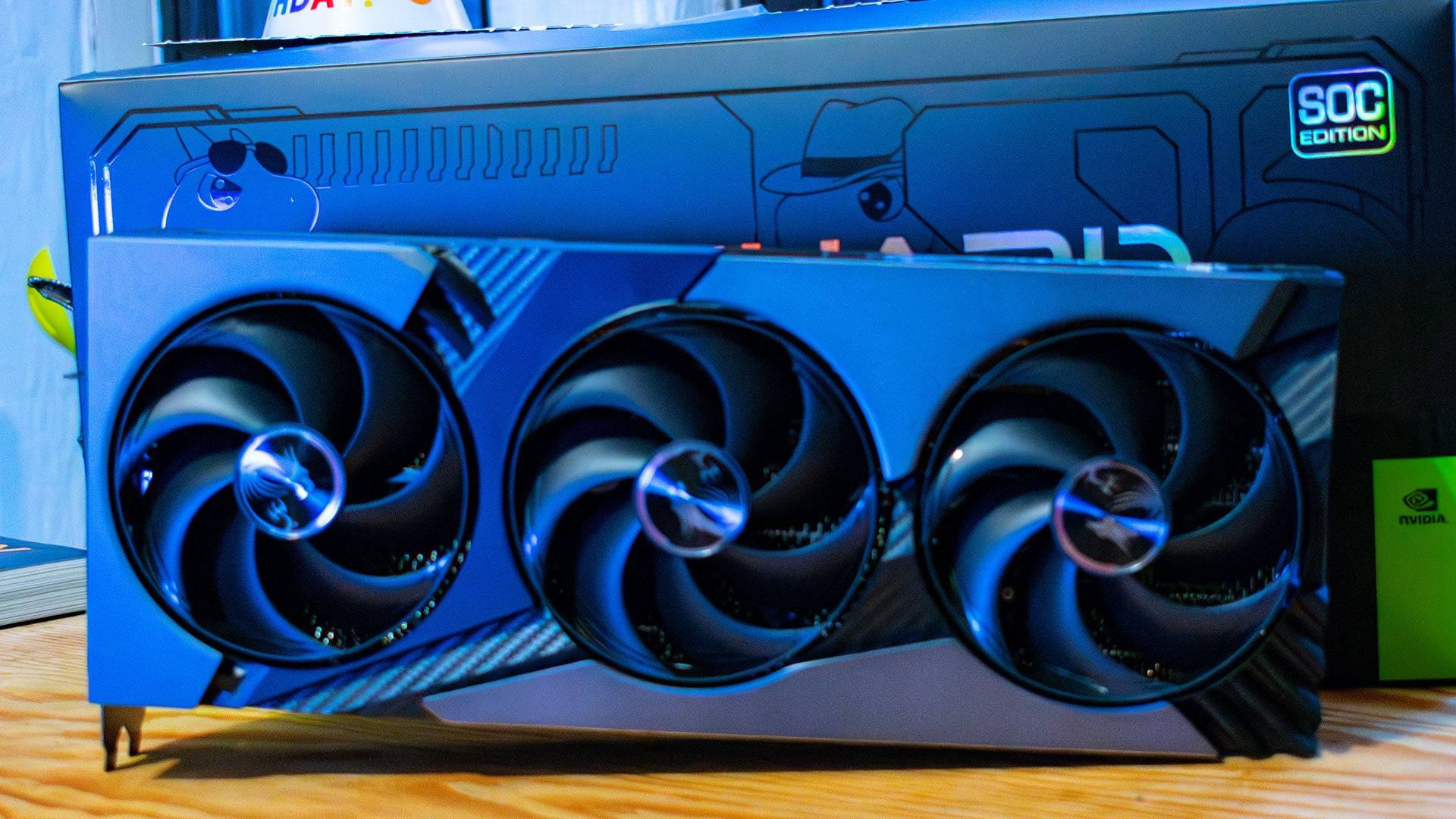
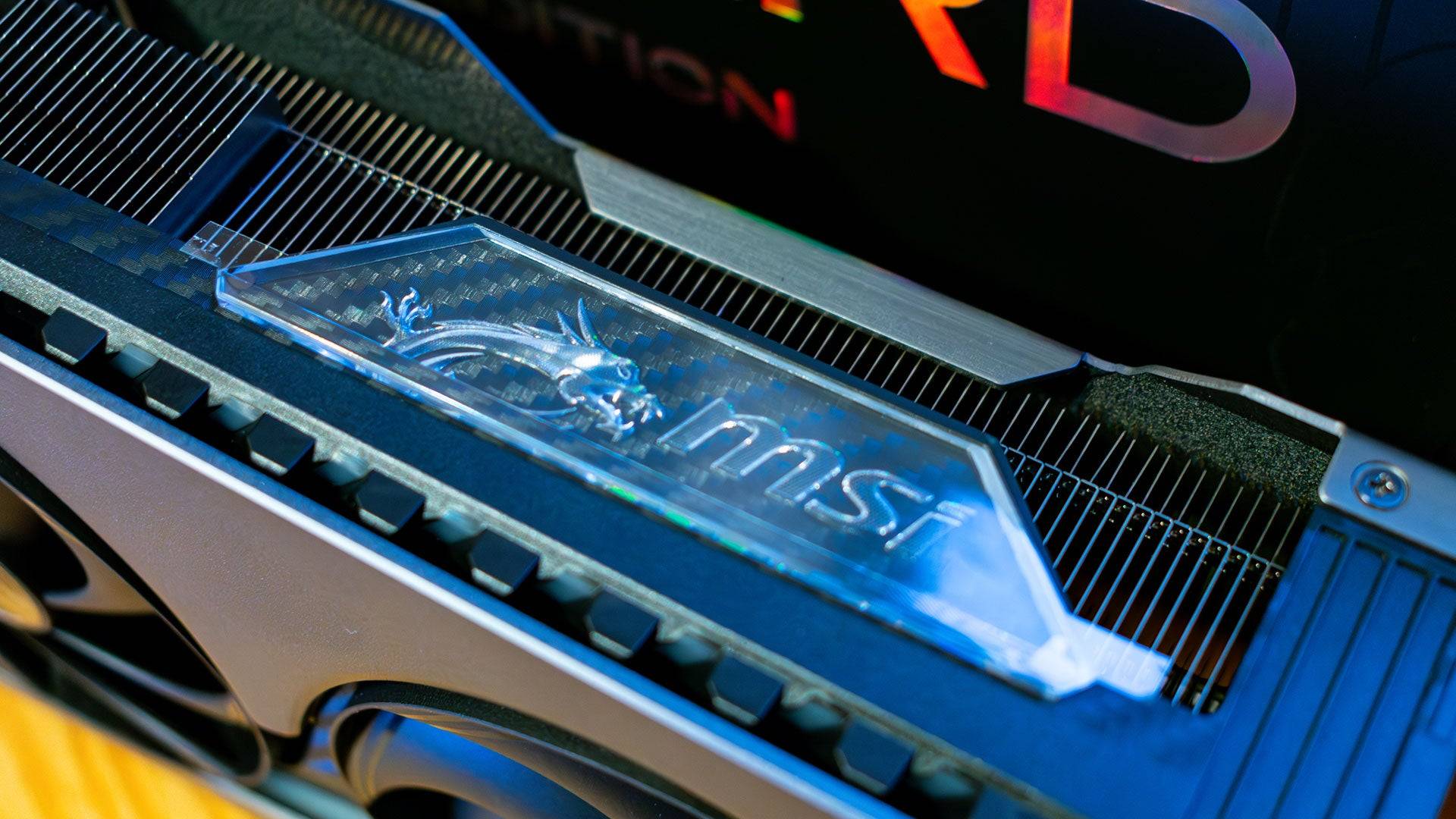
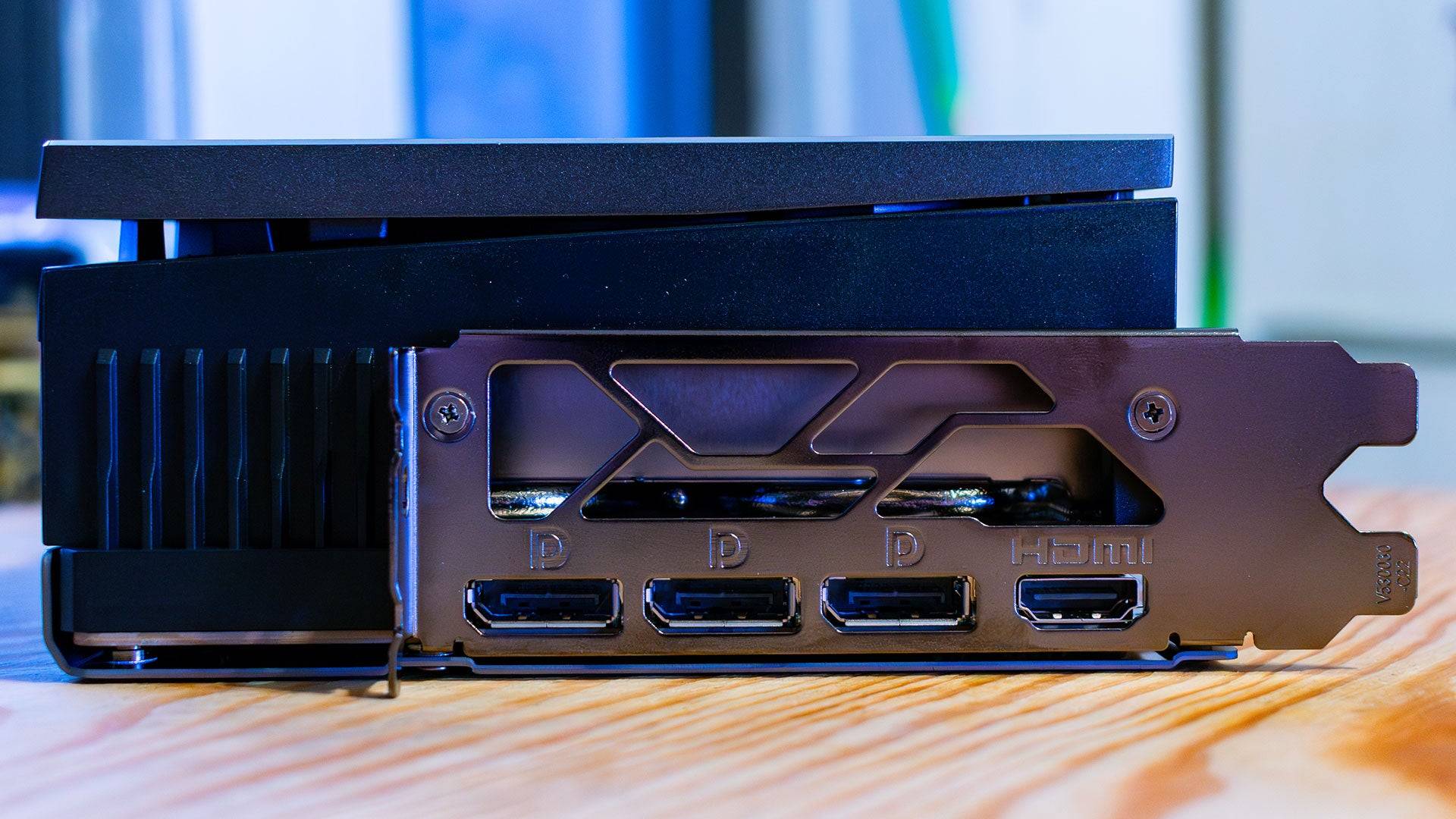
Nvidia GeForce RTX 5070 Ti – Photos
 6 Images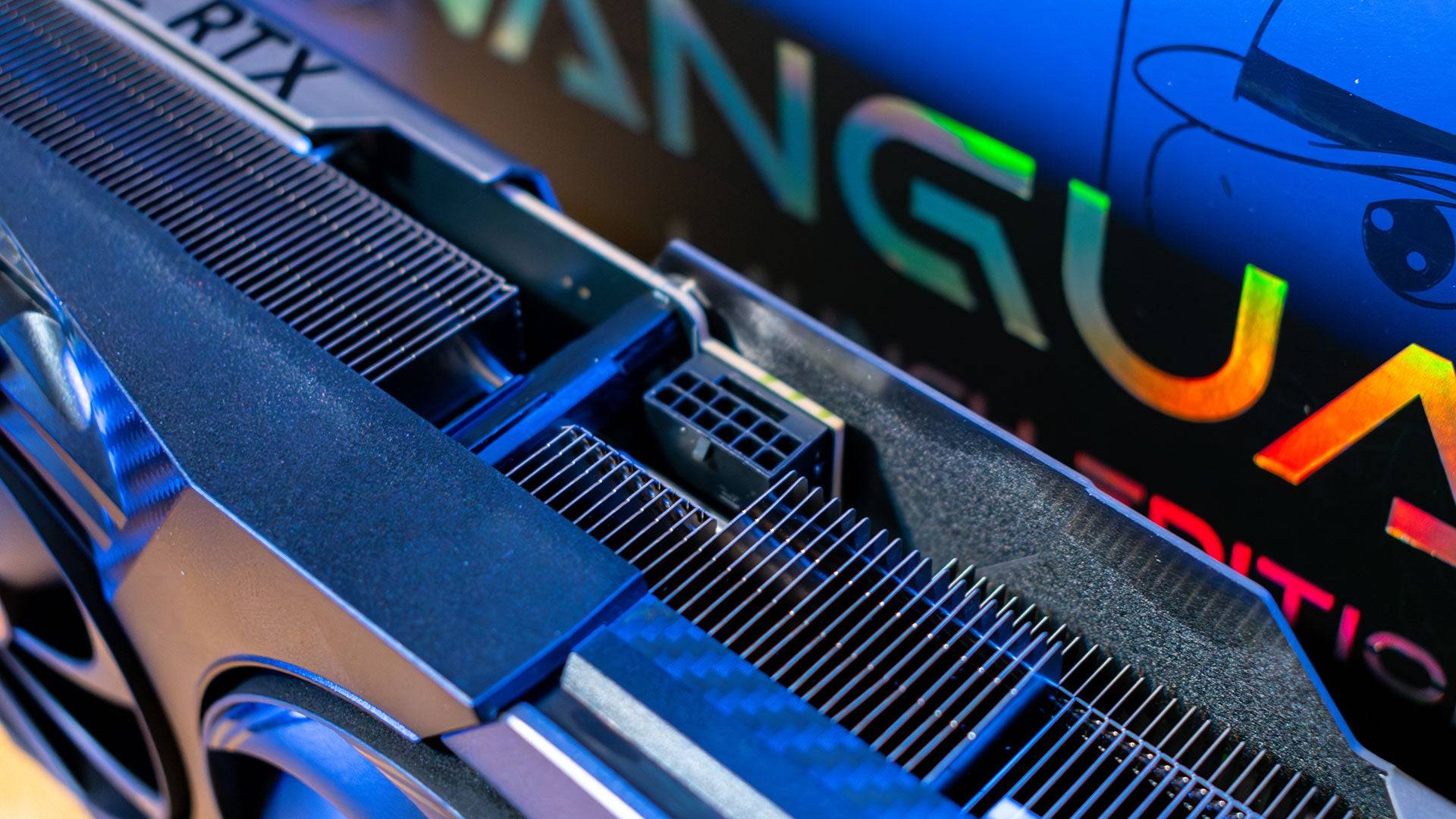

Specs and Features
The Nvidia GeForce RTX 5070 Ti is the third graphics card leveraging Nvidia’s Blackwell architecture. Originally crafted for AI-driven supercomputers, this architecture now powers Nvidia’s latest gaming GPUs, maintaining a strong AI focus.
Built on the GB203 GPU like the RTX 5080, the RTX 5070 Ti has 14 streaming multiprocessors disabled, resulting in 70 SMs, 8,960 CUDA cores, 70 RT cores, and 280 Tensor Cores. It features 16GB of GDDR7 RAM, slightly slower than the RTX 5080’s. The Tensor Cores shine, with Nvidia relying on AI upscaling and frame generation to elevate performance beyond the RTX 4070 Ti’s CUDA cores.
A new AI Management Processor (AMP) enhances efficiency by handling tasks previously managed by the CPU, improving DLSS and frame generation. The shift to a Transformer-based DLSS model from a Convolutional Neural Network improves image quality, reducing ghosting and artifacts seen in earlier versions.
DLSS 4 introduces Multi-Frame Generation (MFG), generating up to three AI frames per rendered frame, unlike the single frame of prior generations. This increases latency, but Nvidia’s Reflex technology helps mitigate it.
With a 300W power draw, the RTX 5070 Ti is comparable to the RTX 4070 Ti and RTX 4070 Ti Super (285W). Nvidia suggests a 750W PSU, though an 850W PSU is advisable for high-end models like the MSI Vanguard Edition reviewed.
While the RTX 5070 Ti outperforms its predecessor, DLSS 4 and Multi-Frame Generation are Nvidia’s key selling points. For high-refresh-rate monitors, this technology maximizes display potential, though latency improvements are limited.
The Tensor Cores analyze rendered frames and motion vectors from the game engine to predict and generate new frames. Unlike the RTX 4090’s single-frame generation, MFG produces up to three, potentially quadrupling frame rates. Real-world gains are lower, however.
In Cyberpunk 2077 with Ray Tracing Overdrive and DLSS on performance mode, the RTX 5070 Ti achieves 46 fps with 43ms latency. With 2x frame generation, it reaches 88 fps at 49ms latency, and 4x frame generation yields 157 fps at 55ms, a 3.4x boost. In Star Wars Outlaws, it hits 67 fps at 4K max settings with DLSS performance, rising to 111 fps with 2x frame generation and 34ms latency, or 188 fps with 4x frame generation at 37ms.
Multi-Frame Generation smooths visuals on high-refresh displays but doesn’t enhance responsiveness. Higher frame rates improve prediction accuracy, minimizing lag and artifacts, making the RTX 5070 Ti reliable for 4K gaming.
Nvidia GeForce RTX 5070 Ti – Benchmarks
 12 Images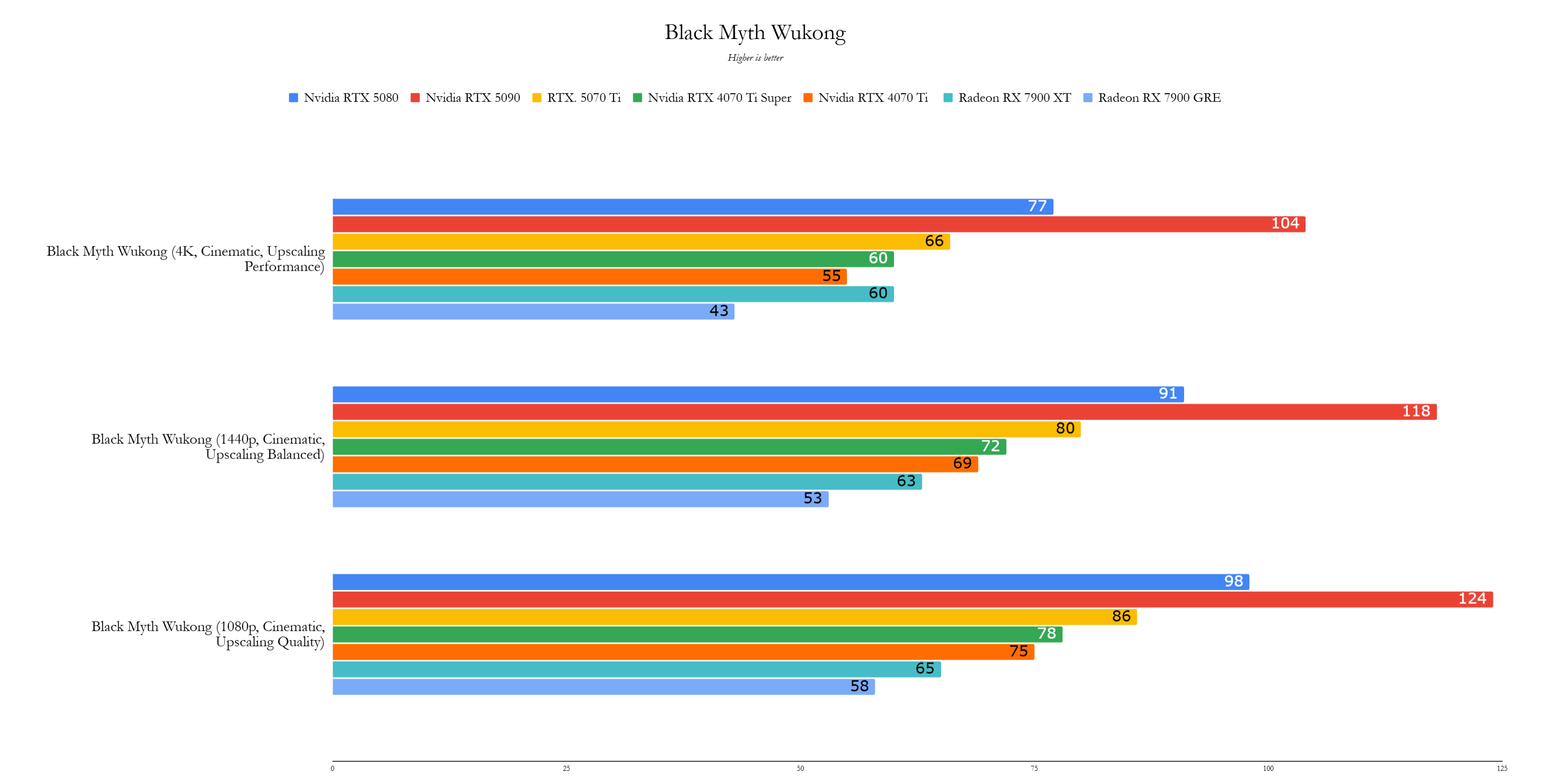
Performance
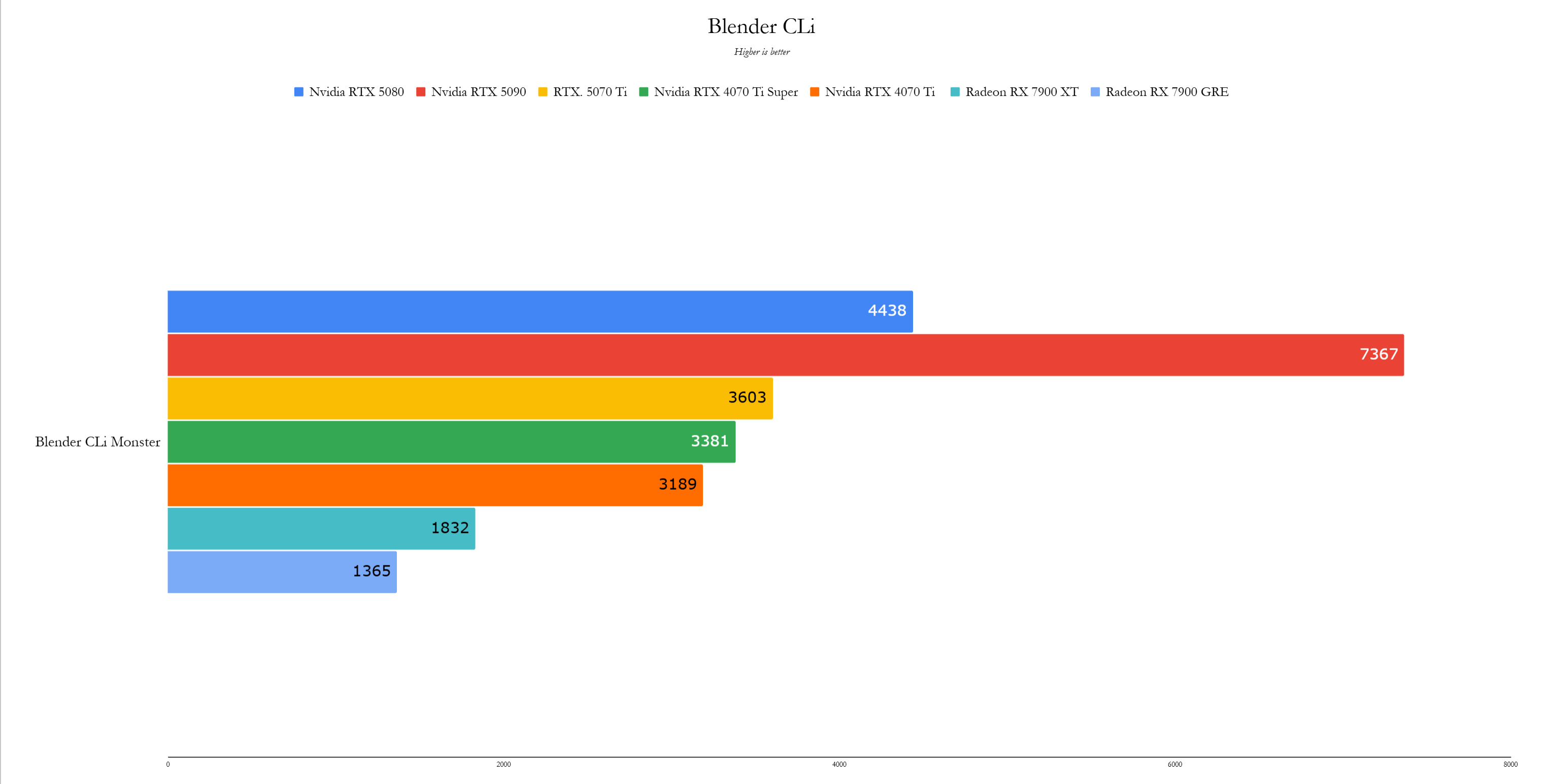
At 4K, the Nvidia GeForce RTX 5070 Ti is 11% faster than the RTX 4070 Ti Super and 21% faster than the RTX 4070 Ti, offering a stronger generational leap than the RTX 5080. It consistently exceeds 60 fps in demanding titles like Black Myth Wukong and Cyberpunk 2077.
The reviewed MSI RTX 5070 Ti Vanguard SOC was tested at stock settings to reflect base performance, scored based on the $749 MSRP. Testing used the latest game versions and drivers: Nvidia cards (except the 5070 Ti) on Game Ready Driver 572.42, AMD cards on Adrenalin 24.12.1, and the RTX 5070 Ti on a prerelease Nvidia driver. Games supporting both DLSS and FSR used the appropriate upscaling tech without frame generation.
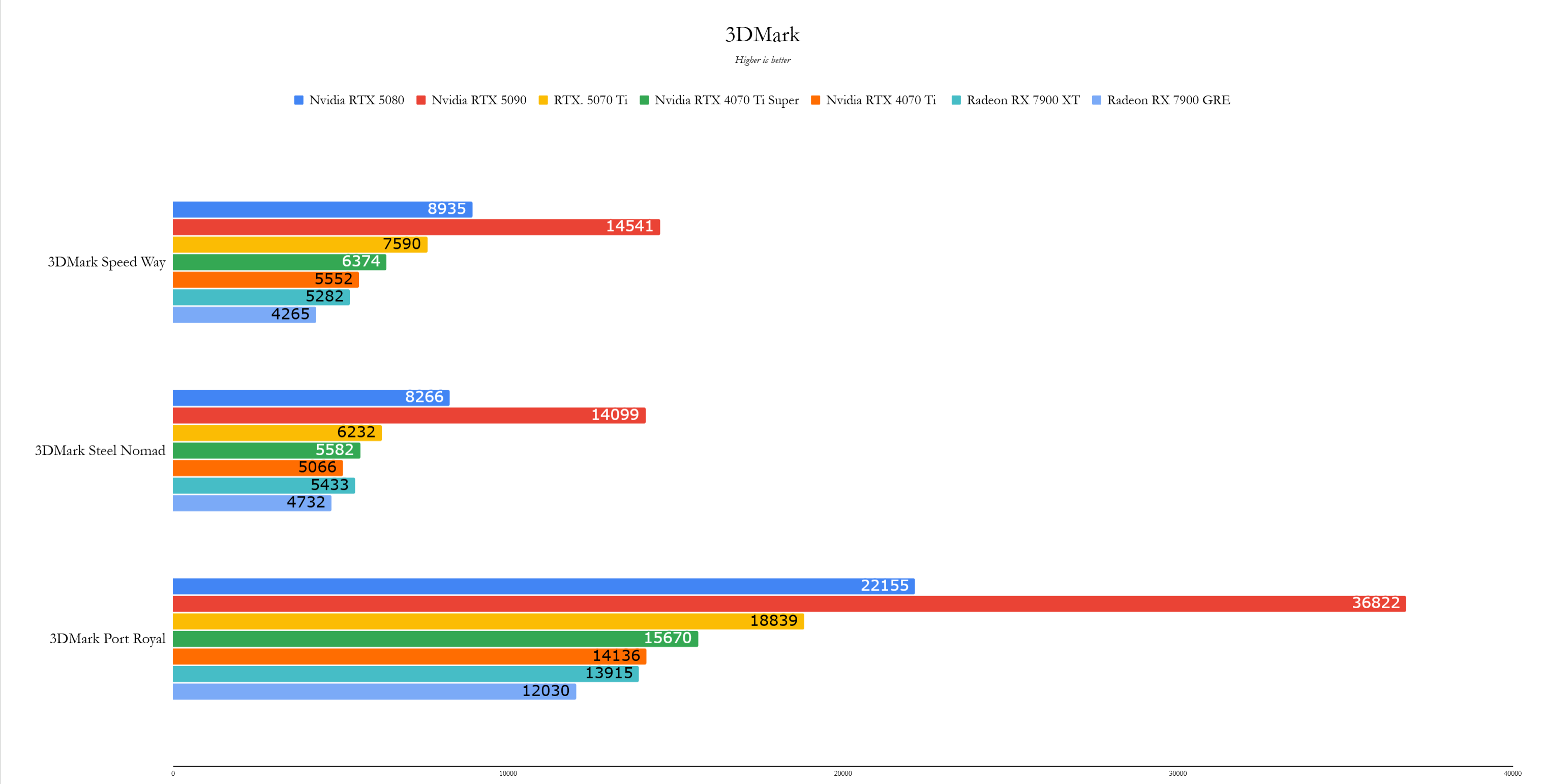
In 3DMark Speed Way, the RTX 5070 Ti scores 7,590 points, a 19% increase over the RTX 4070 Ti Super’s 6,374 and 36% over the RTX 4070 Ti’s 5,552. In Port Royal, it achieves 18,839 points, compared to 15,670 and 14,136, respectively, showing strong future potential as drivers and games optimize for Blackwell.
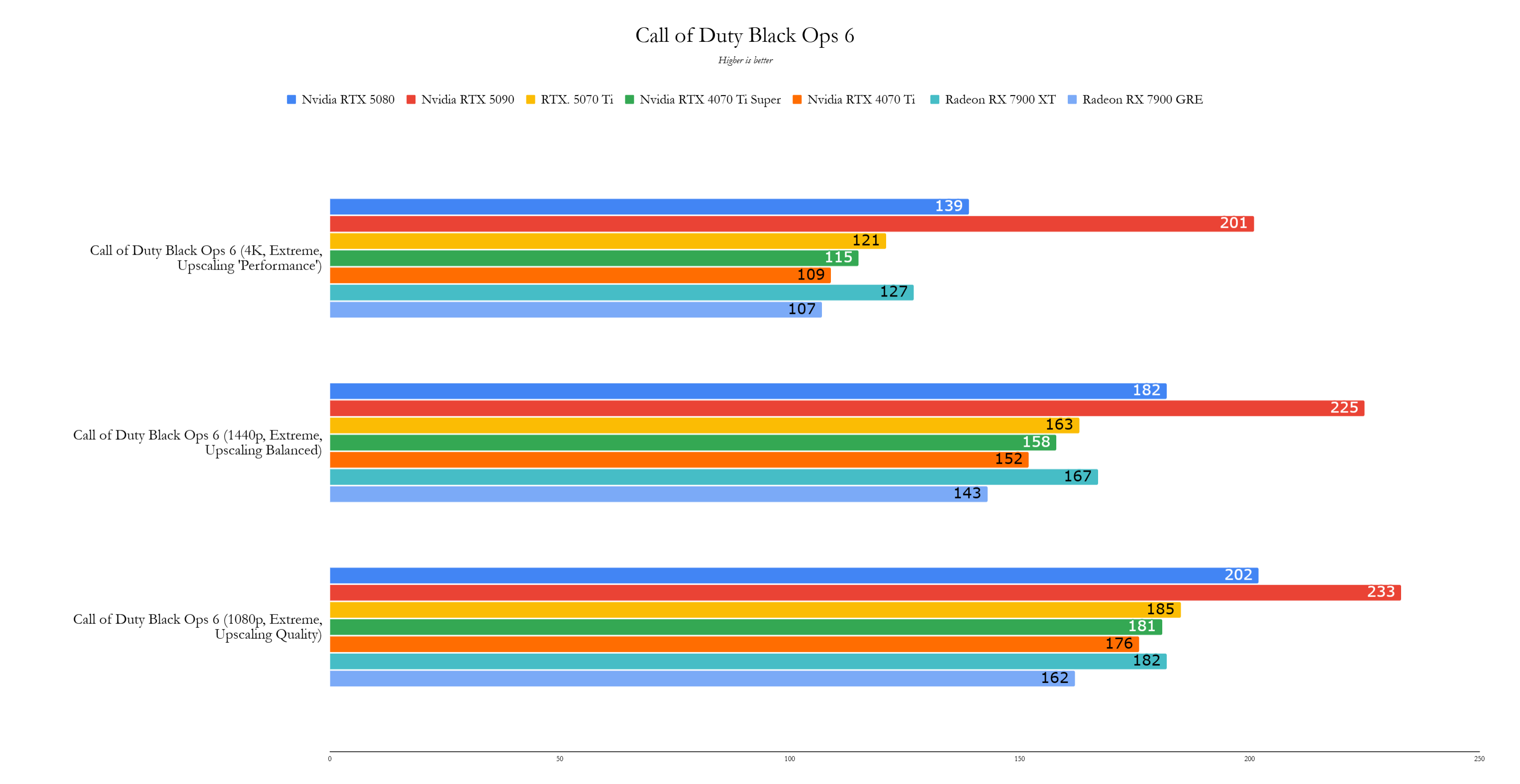
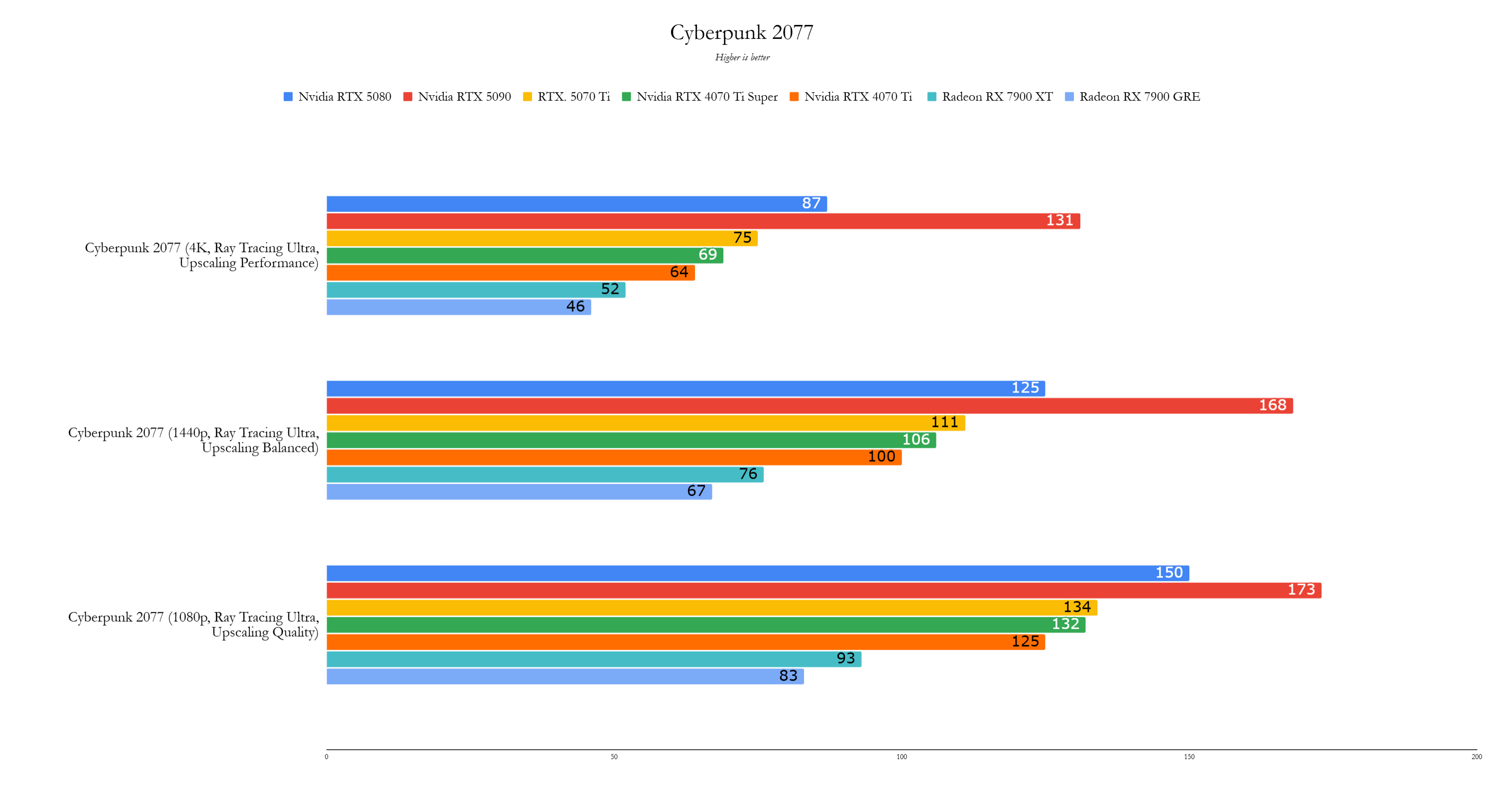
In Call of Duty: Black Ops 6 at 4K Extreme, the RTX 5070 Ti delivers 121 fps, a modest 5% gain over the RTX 4070 Ti Super’s 115 fps. In Cyberpunk 2077 at 4K Ray Tracing Ultra, it secures 75 fps, a 9% lead over the RTX 4070 Ti Super and 17% over the RTX 4070 Ti, solidifying its 4K prowess.
In Metro Exodus: Enhanced Edition at 4K Extreme without upscaling, it achieves 48 fps, compared to 45 fps for the RTX 4070 Ti Super and 42 fps for the RTX 4070 Ti. In Red Dead Redemption 2, it dips slightly to 113 fps, 2% slower than the RTX 4070 Ti Super’s 115 fps, the only tested game with a performance regression.
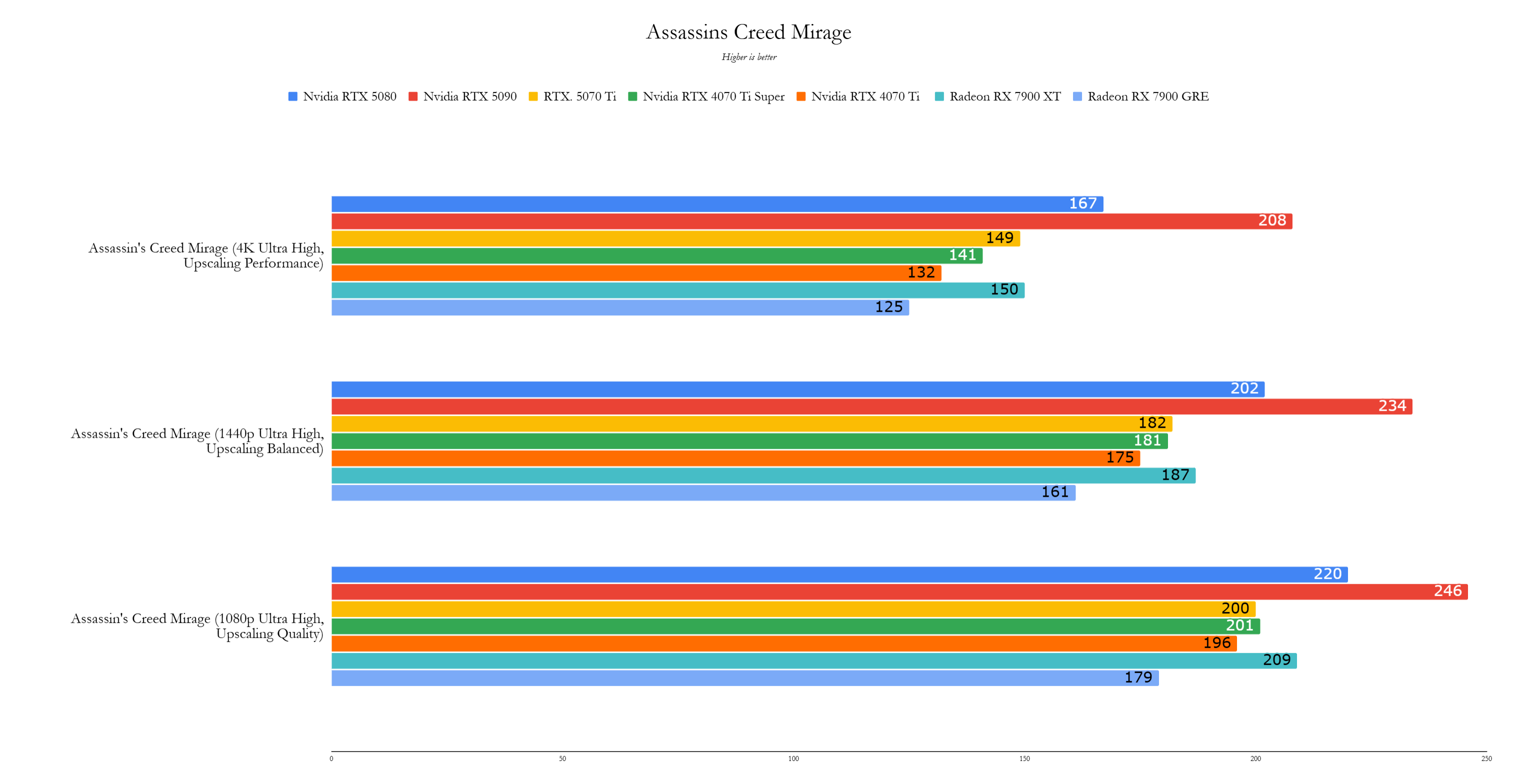
Total War: Warhammer 3 at 4K max settings yields 78 fps, a 15% improvement over the RTX 4070 Ti Super and 30% over the RTX 4070 Ti, showcasing strong rasterization. In Assassin’s Creed Mirage at 4K Ultra High, it hits 149 fps, surpassing the RTX 4070 Ti Super’s 141 fps and the RTX 4070 Ti’s 132 fps, though trailing the Radeon RX 7900 XT’s 150 fps.
In Black Myth Wukong at 4K Cinematic with 40% DLSS, the RTX 5070 Ti averages 66 fps, a 10% edge over the RTX 4070 Ti Super’s 60 fps, outperforming the Radeon RX 7900 XT’s 60 fps with 40% FSR. In Forza Horizon 5 at 4K Extreme, it delivers 152 fps, a 15% improvement over the RTX 4070 Ti Super and 21% over the RTX 4070 Ti, even outpacing the Radeon RX 7900 XT by 10%.
As mid-range GPUs become viable for 4K, the Nvidia GeForce RTX 5070 Ti at $749 offers unmatched value for 4K displays. It delivers a notable performance boost over its predecessor at a lower price than the $799 RTX 4070 Ti, making it the standout RTX 5000 series card.











- 1 All the Buttons on Fisch Can Be Found Here Dec 24,2024
- 2 Hogwarts Mystery Character Guide - All Romance Options Explained Apr 07,2025
- 3 Roblox: Eat Pizza to Grow GIGACHAD Codes (January 2025) Feb 25,2025
- 4 Three Nights at the Blacksite Pressure Guide [April Fools] May 12,2025
- 5 Roblox Forsaken Characters Tier List 2025 Feb 14,2025
- 6 Top Pirate Crew Formations: Like a Dragon: Hawaii Mar 13,2025
- 7 Marvel Rivals' Controversial Hitbox System Draws Attention Feb 11,2025
- 8 Marvel Contest of Champions Champion Cards Guide Mar 14,2025

![LeMOMnade: Family Squeeze! – Version 1.1.1 [mtrellex]](https://img.3xbz.com/uploads/38/1719569762667e8d62c486e.jpg)



-
Mastering the Art of Digital Tools
A total of 10
-
Best News & Magazines Apps for Daily Reading
A total of 10
-
Hidden Gems: Unexpectedly Useful Other Apps
A total of 10