It seems there might be a mix-up in your message — "The Real 'Lost in the Woods' Revealed by Mister Antonio Developer" — but the title and context appear to be either fictional, metaphorical, or possibly referencing a creative project, game, or personal narrative. If you're referring to a real or fictional story involving a character named "Mister Antonio Developer" who reveals the truth behind a mysterious journey titled "Lost in the Woods", here’s a possible interpretation or expansion: "Lost in the Woods: The Real Story Revealed by Mister Antonio Developer" In a hidden corner of the digital world, a mysterious developer known only as Mister Antonio has surfaced, claiming to have uncovered the true origin of the viral phenomenon "Lost in the Woods." What began as an eerie indie game, where players wandered a surreal forest, whispering forgotten memories and solving riddles written in an ancient language, has now been reinterpreted through a series of encrypted logs and audio recordings released by Antonio. According to Antonio, the forest was not a simulation — but a preserved memory of a real, forgotten village in the Carpathian Mountains, where an entire community vanished in 1987 after a failed attempt to merge human consciousness with nature through an experimental neural network. The game, he claims, was built by a surviving child who encoded their trauma into code, creating a digital afterlife. Antonio’s reveal includes: Decoded journal entries from a "Child-Engineer" named Mateo. 3D scans of a remote cabin, now buried under moss and roots. A haunting lullaby that, when played at a specific frequency, triggers emotional flashbacks in listeners. "They didn’t lose their way," Antonio says in a recorded stream, voice trembling, "They were never meant to find it again." As players worldwide replay the game, some report seeing a shadowy figure in the trees — a man in a worn lab coat, holding a notebook with the words: "I built the forest to keep us safe. But now I’m afraid I’ve trapped us." If this is a fictional story, a game concept, or a personal artistic project you're developing, I’d love to help expand it — whether you want to write a full narrative, design game mechanics, create lore, or even build a promotional trailer. Let me know how you’d like to proceed! 🌲🔍

"Leaving Home" by Bart Bonte: A Quiet Masterpiece of Everyday Ritual
In a world increasingly saturated with high-octane gameplay and flashy mechanics, Bart Bonte’s Leaving Home emerges as a serene, meditative contrast—proof that beauty and depth can be found in the simplest of moments.
Set against a minimalist, dreamlike backdrop, the game begins at 7:00 AM, when the alarm clock blares—just like any ordinary morning. But this isn’t just another day. It’s a carefully crafted experience where every action, from flipping a light switch to folding a piece of clothing, feels intentional, meaningful, and quietly profound.
A Morning Like No Other
Leaving Home is not a traditional puzzle game in the classic sense. There are no timers, no frantic button-mashing, and no dramatic plot twists. Instead, it invites you to slow down and feel the rhythm of a morning routine. As you navigate eight interconnected rooms—each a surreal yet familiar space—you’re asked to solve subtle, tactile puzzles that mirror real-life logic: aligning tiles, rotating symbols, matching textures.
The puzzles are deceptively simple, rooted in pattern recognition and spatial awareness. Yet their elegance lies in how they reflect the quiet order we seek in our daily lives. Finding your keys? That’s a puzzle. Deciding which shirt to wear? A choice shaped by mood and routine. Bonte masterfully turns mundane decisions into moments of quiet revelation.
The Art of the Mundane
Visually, Leaving Home is a study in minimalism and atmosphere. The world is rendered in soft pastels and gentle gradients, with abstract architecture that blurs the line between reality and dream. Furniture floats slightly off the ground. Clocks tick without hands. Mirrors show reflections that don’t quite match.
The ambient soundtrack—composed with delicate piano notes and soft textures—complements the mood perfectly. It doesn’t demand attention; it simply is, like the quiet hum of a house waking up.
This is not a game about winning or losing. It’s about being. About pausing long enough to notice how sunlight falls across a wall, or how the sound of running water calms the mind.
Why It Resonates
For fans of Bart Bonte’s earlier works—like the iconic Yellow, Red, and Orange—this new title feels like a natural evolution. While those games thrilled with color-based logic and sudden "aha!" moments, Leaving Home trades spectacle for stillness. It’s more introspective, more personal.
In a culture obsessed with constant stimulation, Leaving Home is a quiet rebellion. It reminds us that not every game needs to be loud to be powerful. That sometimes, the most meaningful experiences are found in the space between actions—the breath before you get out of bed.
Available Now, Free to Play
Leaving Home is available as a free download on the Google Play Store. While the base version includes ads, a single in-app purchase removes them, offering a cleaner, more immersive experience.
Whether you're a long-time fan of Bart Bonte’s whimsical puzzles or a newcomer drawn to atmospheric indie games, Leaving Home is a must-try. It’s not just a game you play. It’s a moment you live.
🎧 Pro Tip: Play it in the morning. Let it begin your day—not as a distraction, but as a gentle invitation to slow down, breathe, and truly be.
And if you find yourself smiling at the way the light hits the wall just so… you’ve already understood the game.








- 1 Todos los botones de Fisch se pueden encontrar aquí Dec 24,2024
- 2 Guía de personajes misteriosos de Hogwarts - todas las opciones de romance explicadas Apr 07,2025
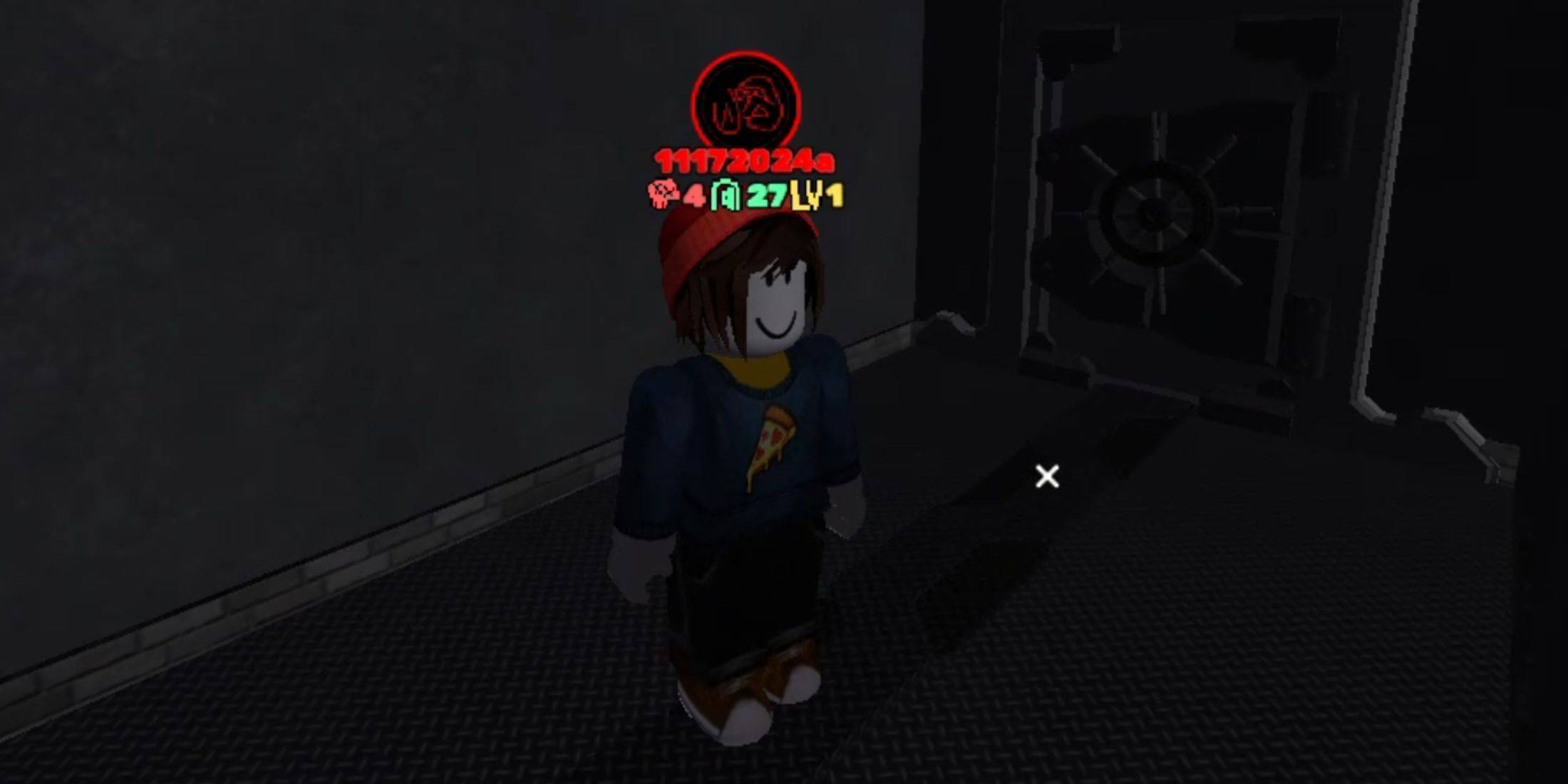
- 3 Roblox: come la pizza para cultivar códigos Gigachad (enero de 2025) Feb 25,2025
- 4 Tres noches en la Guía de presión de Blacksite [April Fools] May 12,2025
- 5 Roblox Lista de nivel de los caracteres abandonados 2025 Feb 14,2025
- 6 Formaciones de tripulación pirata superior: como un dragón: hawaii Mar 13,2025
- 7 El controvertido sistema Hitbox de Marvel Rivals llama la atención Feb 11,2025
- 8 Guía de tarjetas de Marvel Contest of Champions Champion Champion Mar 14,2025

![LeMOMnade: Family Squeeze! – Version 1.1.1 [mtrellex]](https://img.3xbz.com/uploads/38/1719569762667e8d62c486e.jpg)


-
Dominar el arte de las herramientas digitales
Un total de 10
-
Gemas ocultas: otras aplicaciones inesperadamente útiles
Un total de 10